
Conservation Communities - A New Approach for Cities
Lush, green, open space filled with prairie grasses, beautiful wildflowers, songbirds, wildlife habitat, meandering walking trails. Close-knit neighbors in tune with the nature that surrounds their homes and yards. These are the inherent components of Hubbell’s new conservation communities—a concept that may foretell the future for suburban developments.
“A conservation community creates a special place,” says Tina Hadden, whose firm, Mowry Strategies, specializes in environmental issues management and strategic planning. “Unlike a traditional subdivision with rows and rows of houses, you’re working with the lay of the land. You not only have a good view, you have a more natural state—not perfectly manicured lawns, but a more natural look with tallgrasses, native flowers, birds, and butterflies.”
The low-maintenance concept appeals to a wide range of people, Tina says, from young families to empty nesters. “We have nature deficit disorder today” she says. “We’ve become so far removed from nature that we’ve forgotten how to appreciate it. These communities bring nature and its beauty right up to your
back door.”
Although each personal yard is smaller—with houses closer together and nearer the street—among the houses “are larger, beautiful prairie areas, bike paths, and nature trails,” she says. “Common spaces are usually managed by the homeowners’ association but enjoyed by everyone. Children can have a relationship with nature instead of just playing in the backyard.”
To Jennifer Welch, urban conservationist with the Polk County Soil and Water Conservation District, Hubbell’s conservation communities fit perfectly into a statewide effort to embrace low-impact development practices for storm-water management.
“We talk a lot about having our landscapes work for us,” she says. “These open spaces are linkages that provide us with clean water or recreational opportunities. Conservation developments make the water work harder to get off the property. It’s exciting—protecting our water for the future.
“What we’re really talking about is managing storm water differently,” Jennifer adds. “We keep it on site to soak into the ground and seep slowly into the streams. The natural features are worked around and saved, or put back in with tree plantings and native grasses.”
CHANGING THE RULES

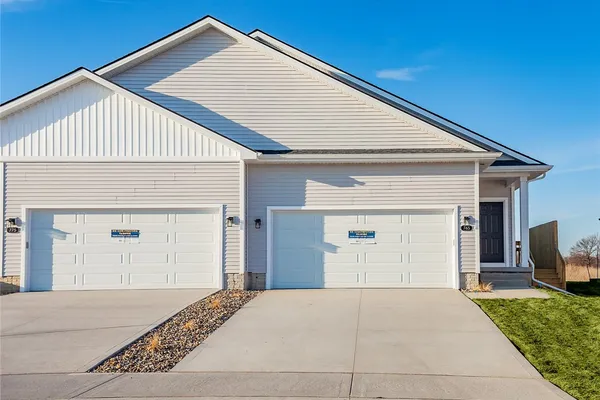
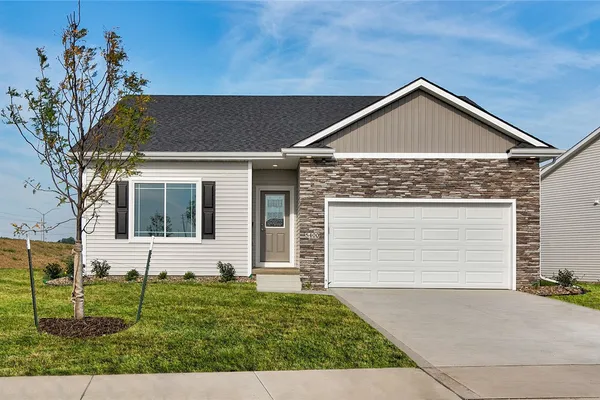
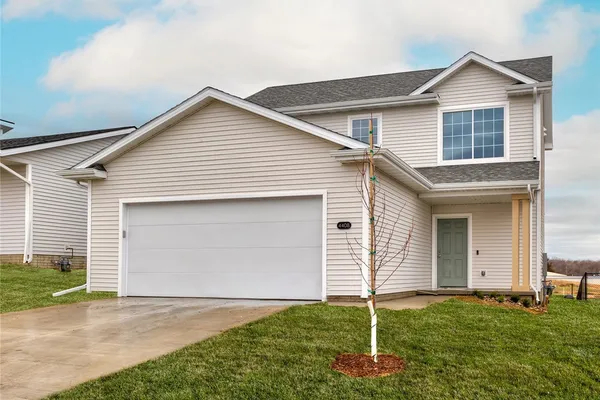
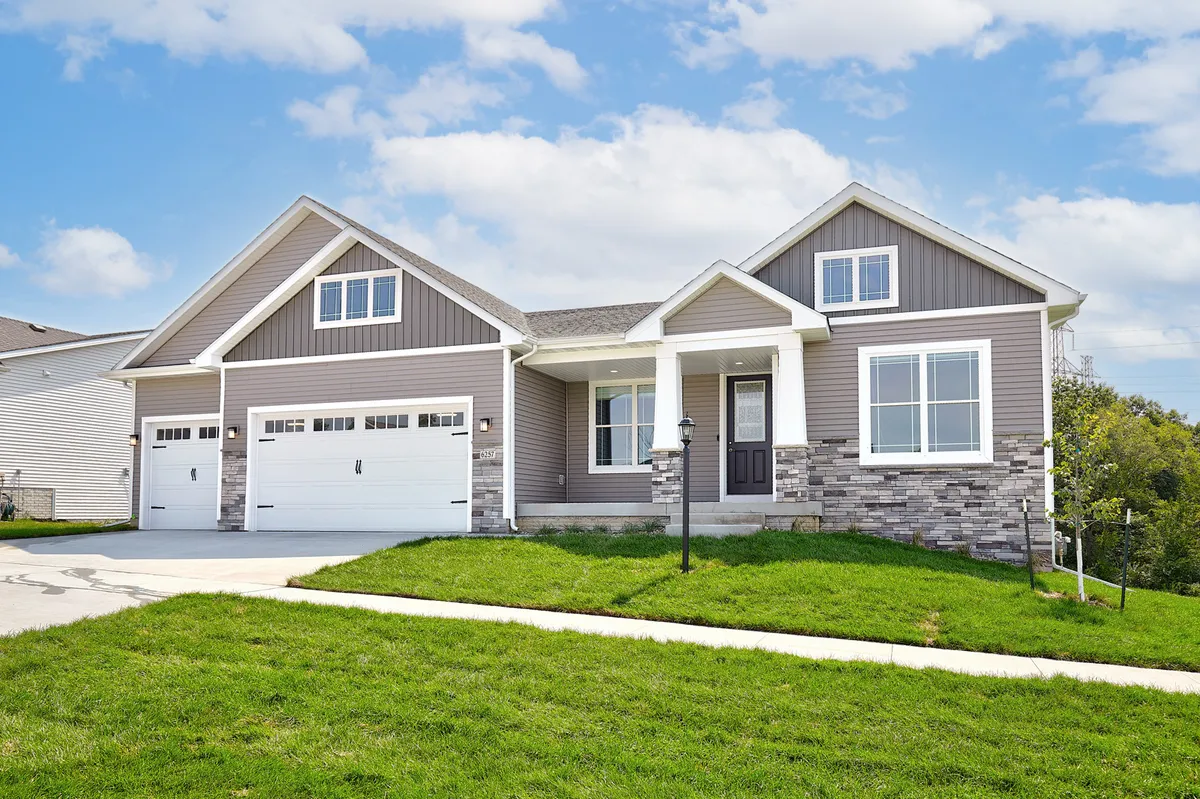
Picture of a Conservation Community with open green space.
Our suburbs in past decades have featured “gray infrastructure,” she says, with streets, sewers, lots of concrete. “Here, we’re talking about ‘green infrastructure,’ with open spaces to manage water flow, places for wildlife, and people movement within the landscape. I see regulations becoming more stringent in the future as we begin to understand the impact our practices have on the environment.”
Today youmay not have anywhere to go besides a sidewalk, Jennifer says. “But we’re beginning to change the rules. It brings back some of our heritage, giving people unstructured space to play on the rocks in the stream channel. It’s a livable, walkable community where we can get out and enjoy our neighbors in a way we haven’t been able to before.”
Gary and Carol Schug find life in a conservation community enjoyable as well as beautiful since moving into Glynn Village in Waukee a few months ago. “We love it,” says Gary. “We’re extended middle age, and we don’t have to maintain the backyard. But still, there is so much space. In May the wildflowers were so pretty.We’d sit out on the deck on Saturday morning, have coffee, and enjoy the wildlife and flowers. You feel like you live in the country.”
A NEW APPROACH FOR CITIES
Ruth Randleman, mayor of the city of Carlisle, where Hubbell’s Danamere Farms conservation community is located, says this new approach to beautifying the landscape and protecting water quality will be good for area cities. “You have to complement a traditional mind-set,” she says. “It’s a departure. We have some ordinances in place that don’t fit with this new kind of thinking. But we were interested in a ‘green’ approach, and it was a good match with Hubbell. I found it fun to work with something that I knew was going to be good for the community. It’s not a fad. If you don’t become sustainable, you may compromise your future.”
David Wilwerding, community development director for the city of Johnston, agrees. Although it’s still in the planning stages, he believes a conservation community will meet some of the city’s future needs. “EPA and DNR standards are tightening in regard to storm water,” he says, “so, going forward, the conservation theme
will need to take hold to meet the standards.”
“Cities are used to conventional subdivisions where they put everything in a pipe and move it into rivers and streams,” says Joe Pietruszynski, development manager for Hubbell Realty. “We’re doing the exact opposite. We’re trying to slow it down, open up more space. It’s a very environmentally sound way to develop land
while improving it.”
First and foremost, Joe says, “a conservation community minimizes the impact of storm water on the environment, retaining the water and cleaning it before it moves off site. When rain moves across the landscape and brings up particulate matter and pollutants from the road, as well as fertilizer, it moves them downstream. We’re creating native wetlands and native prairies and using them as a massive filter for the water.
“Our development mitigates the impact from pollutants and the velocity in which it leaves the site,” he says. “If we don’t do something about it, there will be increased pollutants, particulate matters, and erosion in our rivers and streams.”
WHY HUBBELL?
For Hubbell to become a leader in this effort is a natural, Joe says. “We have always been a market leader in new ideas and concepts. We have many years of construction experience in our company, and we realized this was the way of the future and the right thing to do.”
Many experts are brought in to help develop the communities, Joe says, including technical engineers to analyze the soil, civil engineers, landscape architects, botanists, experts in wetland mitigation, erosion control inspectors, and seed installers. Overall maintenance is uncomplicated, Joe says. “The prairie
regenerates itself. Occasionally we’ll need to do controlled burns and low mowing.
“Residents moving into a conservation community are aware the environment is special,” he says. “It has seven times the public open space that’s found in a typical development, and it’s a landscape that’s going to take on many different forms over time. It opens up space where the kids can play. It’s a completely different environment than in a conventional subdivision. I think ten years from now it will be the standard
approach to suburban development.”
Six Area Hubbell Conservation Communities:
Glynn Village in Waukee is Hubbell Realty Company’s largest conservation community. It features open public parklands, walking/biking trails, play areas, a community clubhouse with pool, and a habitat for birds, butterflies, and other wildlife. Take Hickman Road west of I80/35 approximately 5 miles to Warrior Lane and turn left. Continue south into Glynn Village.
Find homes and information for Glynn Village here.
Danamere Farms in Carlisle features biking/walking trails and spectacular views of rolling countryside in a natural setting. Take the Hwy 65/5 Bypass to Hwy 5 toward Carlisle. Turn south on Scotch Ridge Road. Danamere Farms is on your left.
Find homes and information for Danamere Farms
Meadowlark South in Grimes has something for everyone. It offers single-family homes nestled among native prairies, trails, and large public spaces just minutes from I80/35. Take Highway 141 to South 11th Street and turn west. The community is on the south (left-hand) side. Crosshaven in Johnston is situated on 277 acres and will offer easy access to linked trails and native prairie open space. Take Highway 141 to
Grimes/Saylorville Lake. Turn east on NW 70th Ave/Highway 44. Turn north on NW 100th Street
and continue approximately 3/4 mile. The community will be on your right.
Find homes and information for Meadowlark South
The Greens at Woodland Hills in Polk County sits on 207 acres of lush greenery and mature oak trees just north of Des Moines. It features approximately 100 acres of open space that will give homeowners access to beautful walking and biking trails, play areas and contiguous habitat for birds, butterflies and other
wildlife. Take 35 North to the Corporate Woods exit. Turn West on NE 66th Avenue and travel 1 ¾ miles into the community.
Tuscany in Altoona gives homeowners easy access to all of the amenities the city has to offer in an environmentally-sound neighborhood. The community is located close to Altoona’s extensive park and trails system, the aquatic center, the library, and a new Hy-Vee. Take 80 East to the Bondurant/Altoona exit and turn south on to 1st Avenue North. Turn east on NE 54th Avenue, and then south on to NE 80th Street, which will turn into 14th Avenue SE. The entrance to the community will be on your left.